

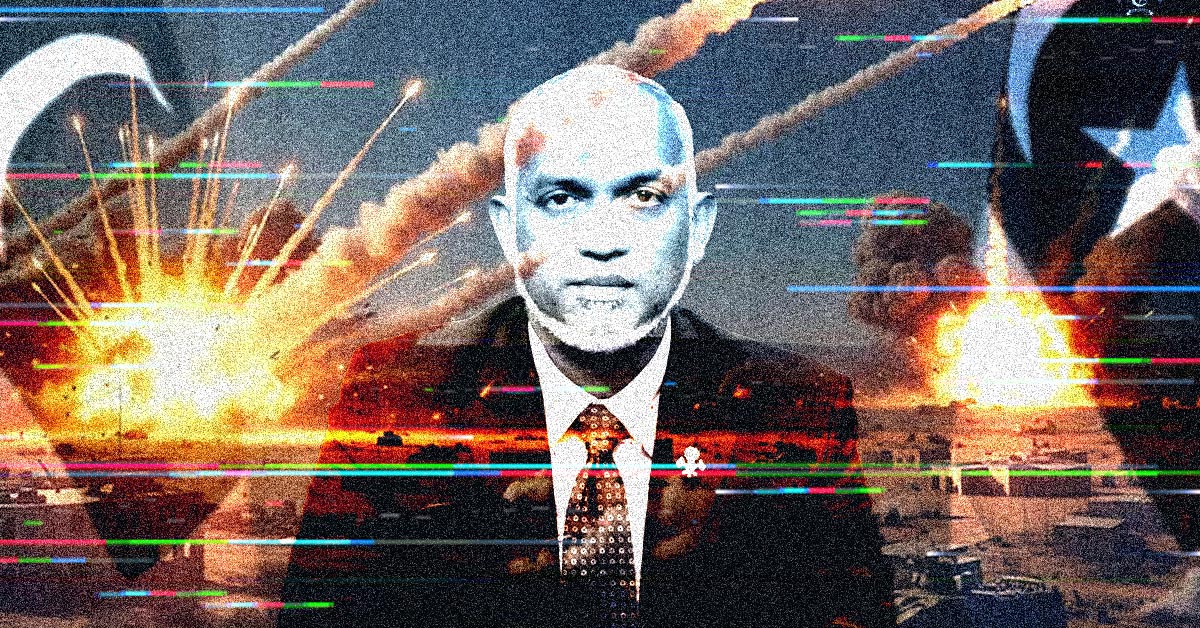
The war on Iran is now in its third week. Unprecedented and escalating, no one can see an end in sight or what that end might even look like. Over 1,400 people have been killed in Iran alone, global oil prices are soaring and energy markets are in turmoil. For the Maldives, 4,000 kilometres from Tehran, but with no domestic fuel reserves, a tourism-dependent economy, and a debt profile already at breaking point, the consequences are daunting.
The Maldives government has very little room for delayed response. But it is acting and spending as though it has not grasped the gravity of what is happening, all its political energy focused only on the next election.
The government also needs to stop taking the Maldivian people for fools. The public does not need to be managed. It needs to be informed.
Key Economic Pressure Points
These are the most urgent economic pressure points facing the Maldives right now, spanning immediate, short-term, and medium-term consequences.
Fuel supply chain: The Maldives has no domestic fossil fuel reserves and depends almost entirely on imported liquid fossil fuels for electricity production, industrial uses, transport, and cooking. The Maldives spends approximately USD 537 million on fuel annually, and prices have risen by an average of around 20 per cent since the war began. This is about both cost and availability: the cost matters, and so does whether the fuel can be sourced at all, given that Oman is under fire and the Strait of Hormuz is effectively closed.
Pump prices have already risen sharply: petrol increased from MVR 13.50 to MVR 16.01 per litre and diesel from MVR 13.92 to MVR 17.54 per litre, effective 5 March 2026. Cooking gas availability was already tight, with Maldive Gas purchasing from Villa Gas since the start of the year. Today, Maldive Gas has begun rationing supplies again, this time cutting quantities by half. Rising fuel costs and tightening gas supplies will pass through the entire economy, from utility bills and basic goods in every home to the cost of running a business.
Foreign exchange reserves: Usable reserves stand at below one month of imports. This was the position before the war. At the baseline oil price of around USD 70 per barrel, the fuel import burden is already significant. When prices exceed USD 100, as they have since this war began, the government faces an additional foreign currency outflow of more than USD 6 million per month. The government’s own assessment projects a revenue decline of between USD 80 million and USD 100 million if the conflict continues for approximately one month.
Debt serviceability: Set this reserve picture against what the government owes. External debt repayments exceed USD 1.5 billion in 2026 alone. The World Bank has estimated that the government would need reserves of USD 1.07 billion to sustain its debt obligations through 2026. In ten days, on 8 April, a USD 500 million Sukuk repayment falls due. How the government intended to meet it was already in serious doubt before this war began. It now seems impossible.
Tourism revenue: Tourism accounts for more than 60 per cent of foreign exchange receipts. The closure of major transit airports has reduced arrivals and driven cancellations of 23.4 per cent in the first week of March. Maldives tourism has shown remarkable resilience, but this war will take its toll.
Food supply: The food supply impact may not be immediate, but the Maldives needs to brace itself. The country imports over 90 per cent of its food needs. The Strait of Hormuz closure is disrupting global food and agricultural supply chains, driving up production costs and import prices worldwide. Because agricultural output is seasonal and supply chain adjustments are slow, the full impact will unfold over months rather than days. The pressure is already building, and the Maldives, with no domestic production to fall back on, will bear the full weight.
The Government Cannot Act as Though There Is No War
The Maldivian people need two things from their government right now: 1) serious fiscal management in response to the crisis, and 2) a clear and honest account of the situation the country is in, including what they can expect and when. They are getting neither.
On fiscal management, the government has made its priorities clear. It has no intention of reining in its spending. The administration is proceeding as though the war is someone else’s problem: lavishly campaigning using state resources, advertising positions that are clearly jobs for votes, proceeding with Eid lighting that no one asked for. In short, the Maldives government is acting as though the upcoming elections are the crisis, not the raging war.
When Mihaaru reported yesterday on the RDC hiring of an additional 150 staff, 90 per cent of readers reacted with anger. The public has clearly grasped what the government has not: that this is not a moment for business as usual.
Previous Maldivian governments have faced wars, the global financial crisis, and a pandemic. Regardless of political stripe, each understood that a crisis demands immediate fiscal adjustment. During the Gulf War, Maumoon cut fuel use and official travel. Nasheed immediately slashed government spending during the 2009 financial crisis. During the pandemic, the Maldives Parliament and Solih’s Cabinet were among the first worldwide to cut salaries. Regional neighbours are doing the same today: from Bangladesh to Malaysia to Thailand, governments have moved on fuel subsidies, plant shutdowns, export bans, and travel cuts. The Muizzu administration has shown no sign of adjusting course and nothing to suggest any planning for what lies ahead.
The government also needs to start communicating with transparency. Constantly telling the public it has everything under control is not the same as having everything under control. Propaganda headlines do not constitute leadership, and Maldivians cannot simply be fooled into false reassurance. They are reading the news and drawing their own conclusions. They are perfectly aware that the war will have a direct and profound impact, and they will all feel it in their households and businesses. What they need is honest, specific communication: what the fuel reserves are, the status of contingency procurement, and what the fiscal projections look like under different scenarios.
Transparency is not a courtesy. It is a democratic obligation, and in a crisis of this magnitude, it is also essential. People deserve to know from their government what is coming and what they need to do to prepare for it.
Conclusion
When the United States and Israel attacked Iran on 28 February and war broke out, the Maldives was already in a position of significant fiscal fragility. Three weeks in, the war is bearing down on its economy and public finances with both urgency and increasing severity. The Maldives government needs to act quickly: adjust its spending, recalibrate its priorities, and communicate honestly with the public about what lies ahead. The Maldivian public are not passengers to be kept calm until the turbulence passes. They are citizens of a small, exposed economy who deserve to know the truth about the situation their country is in and what it means for their lives.


Leave a Reply